
IKS Health Acquires ARAI to Build Out Specialized AI Stack
IKS Health acquired healthcare AI startup ARAI to strengthen the technology underpinning its automation tools, as well as reduce its dependence on third-party AI models.
IKS Health acquired healthcare AI startup ARAI to strengthen the technology underpinning its automation tools, as well as reduce its dependence on third-party AI models.

Microsoft launched Copilot Health, an AI model that pulls together users’ medical records, wearable data and trusted health information. The move comes amid a wave of other tech companies announcing healthcare-focused large language models for consumers, including Anthropic, OpenAI and Amazon.


We have the opportunity to design systems that give people greater capacity for the work where human presence matters most: listening, understanding, reassuring, deciding, and caring.

Amazon One Medical expanded access to its AI-powered health assistant, allowing anyone on the Amazon website or app to ask medical questions, interpret lab results and connect to care if needed. The chatbot reflects a broader trend of AI becoming a first stop for Americans navigating the healthcare system.

Google Cloud is partnering with healthcare organizations including CVS Health, Humana, Highmark Health, Quest Diagnostics and Waystar to deploy agentic AI tools across patient engagement, clinical workflows and revenue cycle management

As OpenAI and Anthropic move deeper into healthcare, experts say AI chatbots are becoming the new front door to medicine. This shift is shaking things up for some health tech startups, redefining the patient-provider relationship, and intensifying debates over safety, privacy and accountability.
AI rivals Anthropic and OpenAI are both expanding their large language models into healthcare. Anthropic is blending its enterprise and consumer tools in a single platform, while OpenAI is separating its consumer-facing ChatGPT Health from its industry-focused OpenAI for Healthcare. They are both targeting patients, providers and researchers with AI tools for tasks ranging from personal health insights to coding to prior authorization.


Veradigm examines key clinical trends, comorbidity profiles, and treatment trends across adolescence, reproductive years, and peri-/post-menopause. Download it today!

The healthcare industry is contending with a difficult question: how to properly wield AI without taking on too much risk? Inherent in this battle is the role of humans. Here's how Merck's chief data officer is viewing AI.

Mount Sinai researchers found that popular AI chatbots like ChatGPT and DeepSeek R1 can generate convincing but false medical information when given even a single fabricated term in a prompt. While the study underscored the need for stronger safeguards, its lead author noted that generative AI still holds major promise for reducing clinician workload if used responsibly.

The AI race heats up with a new kid on the block from China. How did it compare against a popular U.S. genAI engine on a simple healthcare industry question?

By automating repetitive tasks, improving accuracy, and enabling data-driven decisions, LLMs promise to optimize processes, reduce costs, and free healthcare systems to focus on strategic goals.
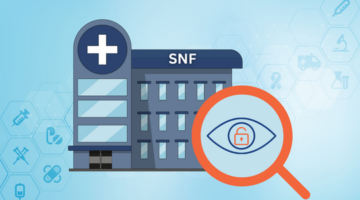
What if health plans could identify member decline before an avoidable hospitalization occurs? Real-time clinical visibility into long-stay SNF members uncovers risk earlier and drives better outcomes.

Large language models will soon become a much bigger part of doctors’ clinical workflows, former FDA Commissioner Scott Gottlieb said Tuesday at the 3rd Annual Summit on the Future of Rural Health Care.

It’s important that we focus attention on the areas where AI is already having a significant impact. These are the practical applications that will allow the best and brightest researchers to focus on science rather than data munging.

Researchers at the University of Massachusetts Amherst released a paper this week showing that large language models tend to hallucinate quite a bit when producing medical summaries.

OpenAI’s GPT-4 was able to identify suicidal ideation with similar accuracy to clinicians, but in a much shorter amount of time, a new study from Brightside Health found.

Anthropic's Claude3-Opus performed better than GPT-4, but both fell short of humans on a test of objective medical knowledge. The study was conducted by a firm developing LLMs specifically for healthcare that claim to be incorporating peer-reviewed sources of information.